Honor Magic9 vs Doogee S300 Plus
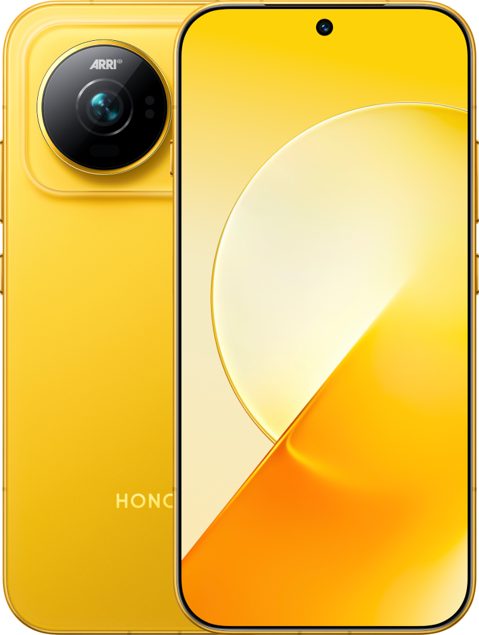
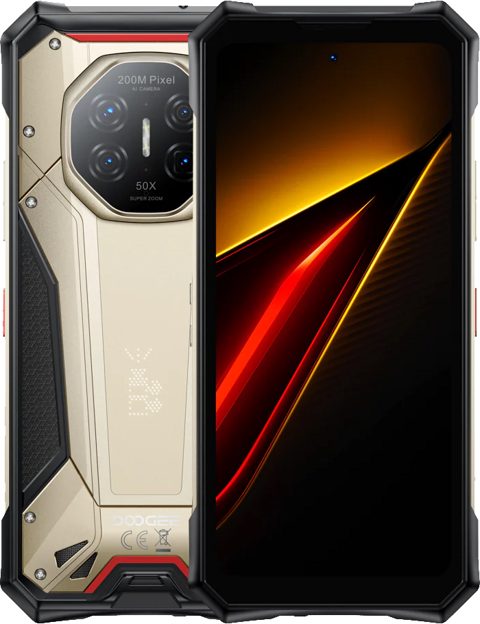
Verdict
Honor Magic9 is much better for most people
Overall score
92 Honor Magic9 73 Doogee S300 Plus
Why pick Honor Magic9
- Optical stabilization on the main camera
- Wireless charging (50 W)
- 79% faster overall Estimated
- OLED screen (vs LCD)
Why pick Doogee S300 Plus
- Faster charging: 120 W vs 80 W
Honor Magic9 is much better for gaming
Overall score
95 Honor Magic9 75 Doogee S300 Plus
Why pick Honor Magic9
- 79% faster overall Estimated
- Wireless charging (50 W)
- OLED screen (vs LCD)
- Sharper screen (461 ppi vs 396 ppi)
Why pick Doogee S300 Plus
- Faster charging: 120 W vs 80 W
Honor Magic9 is much better for photos and video
Overall score
93 Honor Magic9 72 Doogee S300 Plus
Why pick Honor Magic9
- Optical stabilization on the main camera
- 4K 120fps video recording (vs 4K 30fps)
- Wireless charging (50 W)
- OLED screen (vs LCD)
Why pick Doogee S300 Plus
- Faster charging: 120 W vs 80 W
Honor Magic9 is clearly better for battery life
Overall score
94 Honor Magic9 80 Doogee S300 Plus
Why pick Honor Magic9
- Wireless charging (50 W)
- Optical stabilization on the main camera
- 79% faster overall Estimated
- OLED screen (vs LCD)
Why pick Doogee S300 Plus
- Faster charging: 120 W vs 80 W
Honor Magic9 is much better for the money
Overall score
90 Honor Magic9 46 Doogee S300 Plus
Why pick Honor Magic9
- Optical stabilization on the main camera
- Wireless charging (50 W)
- 79% faster overall Estimated
- OLED screen (vs LCD)
Why pick Doogee S300 Plus
- Faster charging: 120 W vs 80 W
Scores by category
- Honor Magic9
- Doogee S300 Plus
Performance
98 Honor Magic9 81 Doogee S300 PlusTypical for its chipsetEstimatedDisplay
94 Honor Magic9 56 Doogee S300 PlusCamera
94 Honor Magic9 72 Doogee S300 PlusBattery
97 Honor Magic9 89 Doogee S300 PlusEstimatedLab testedBuild and durability
67 Honor Magic9 73 Doogee S300 PlusConnectivity and features
85 Honor Magic9 53 Doogee S300 Plus
Biggest differences
See all specs Spec Honor Magic9Doogee S300 Plus Ahead by
Optical stabilization Better: YesNo
Wireless charging Better: 50 WNo
Overall performance (AnTuTu 10) Better: 2,777,490Typical for its chipset1,550,128Estimated
Screen type Better: OLEDLCD
Best video mode Better: 4K 120fps4K 30fps
Speakers Better: stereo speakersa single speaker
Size and weight
- Honor Magic9
- Doogee S300 Plus
Full specs
General
Specs Honor Magic9Doogee S300 Plus
Announced
Monday, 28 September 2026
—
Released
Thursday, 08 October 2026
—
Status
Available
Available
Design
Specs Honor Magic9Doogee S300 Plus
Height
151 mm (5.94 inch)
180.8 mm (7.12 inch)
Width
72.3 mm (2.85 inch)
84 mm (3.31 inch)
Thickness
8.5 mm (0.33 inch)
17.7 mm (0.70 inch)
Weight
209 g (7.37 oz)
376 g (13.26 oz)
Build materials
Back: Glass
Frame: Aluminum
Front: Glass
Frame: Aluminum
Front: Glass
—
Colors
Black, Green, White, Yellow
Black, Gold, Gray
Resistance
Dust and water-resistant (withstands high-pressure water jets; submersible up to 1.5m for 30 minutes)
Dust and water-resistant (withstands high-pressure water jets; submersible up to 1.5m for 30 minutes)
Resistance certification
IP68, IP69K
IP68, IP69K
Display
Specs Honor Magic9Doogee S300 Plus
Display type
Better:
OLED
IPS LCD
Display size
6.37 inch
6.78 inch
Resolution
1236 × 2664 pixels
1080 × 2460 pixels
Refresh rate
120 Hz
120 Hz
Aspect ratio
19.5:9
—
Pixel density
Better:
461 ppi
396 ppi
Screen-to-body ratio
≈ 91.5%
≈ 71.9%
Screen protection
—
MIL-STD-810H compliant
Peak brightness
10000 cd/m²
—
Display features
1 billion colors
3840Hz PWM Dimming
Capacitive Touchscreen
Dolby Vision
HDR image support
HDR Vivid
Measured at an isolated spot during video playback only
Multi-touch display
3840Hz PWM Dimming
Capacitive Touchscreen
Dolby Vision
HDR image support
HDR Vivid
Measured at an isolated spot during video playback only
Multi-touch display
—
Hardware
Specs Honor Magic9Doogee S300 Plus
Chipset
Qualcomm Snapdragon 8 Elite Gen 5
MediaTek Dimensity 8300
CPU cores
8
8
CPU technology
3 nm
4 nm
CPU max speed
4.6 GHz
3.35 GHz
CPU architecture
64-bit
64-bit
Microarchitecture
2x 4.6 GHz – Oryon V3 Phoenix L
6x 3.62 GHz – Oryon V3 Phoenix M
6x 3.62 GHz – Oryon V3 Phoenix M
1x 3.35 GHz – Cortex-A715
3x 3.2 GHz – Cortex-A715
4x 2.2 GHz – Cortex-A510
3x 3.2 GHz – Cortex-A715
4x 2.2 GHz – Cortex-A510
Memory type
LPDDR5X
LPDDR5X
GPU
Qualcomm Adreno 840 @1.20 GHz
ARM Mali-G615 MC6
RAM
12GB, 16GB
16GB
Storage
256GB, 512GB, 1TB
1TB
Variants
256GB 12GB RAM
512GB 12GB RAM
512GB 16GB RAM
1TB 16GB RAM
512GB 12GB RAM
512GB 16GB RAM
1TB 16GB RAM
1TB 16GB RAM
Expandable storage
No
Yes
Card slots
—
microSDXC
Benchmarks
Specs Honor Magic9Doogee S300 Plus
Kalvo speed score
98
—
AnTuTu 10
2,777,490 Typical for Qualcomm Snapdragon 8 Elite Gen 5 · Rank 15 of 1,533
—
Geekbench 6 multi-core
10,876 Typical for Qualcomm Snapdragon 8 Elite Gen 5
—
Software
Specs Honor Magic9Doogee S300 Plus
Operating system
Android 17 (Cinnamon Bun)
Android 16 (Baklava)
User interface
MagicOS 11
—
Main camera
Specs Honor Magic9Doogee S300 Plus
Camera support
Yes
Yes
Quad camera
—
200 MP, ƒ/1.8 ( Wide angle ), 1/1.3" Sensor size
8 MP, ƒ/2.4 ( Telephoto ), x3 Optical zoom
20 MP, ƒ/1.8 ( night vision )
8 MP, ƒ/2.2, 119° ( Ultra-wide angle )
PDAF
8 MP, ƒ/2.4 ( Telephoto ), x3 Optical zoom
PDAF
20 MP, ƒ/1.8 ( night vision )
infrared night vision lights
8 MP, ƒ/2.2, 119° ( Ultra-wide angle )
Triple camera
200 MP, ƒ/1.9 ( Wide angle ), 1/1.4" Sensor size
200 MP, ƒ/2.6 ( Periscope telephoto ), x3.5 Optical zoom, 1/1.56" Sensor size
50 MP, ƒ/2.0 ( Ultra-wide angle )
Optical Image Stabilization (OIS)
PDAF
PDAF
200 MP, ƒ/2.6 ( Periscope telephoto ), x3.5 Optical zoom, 1/1.56" Sensor size
Optical Image Stabilization (OIS)
PDAF
PDAF
50 MP, ƒ/2.0 ( Ultra-wide angle )
PDAF
—
Flash support
Yes
Yes
Flash type
Multi-focus LED flash
Dual LED flash
Features
ARRI mode
Color Spectrum sensor
High Dynamic Range (HDR)
Panorama
Color Spectrum sensor
High Dynamic Range (HDR)
Panorama
High Dynamic Range (HDR)
Panorama
Panorama
Video support
Yes
Yes
Video resolution
2160p @ 30/60/120 fps
1080p @ 30/60 fps
1080p @ 30/60 fps
2160p @ 30 fps
1080p @ 30 fps
1080p @ 30 fps
Video features
10-bit Video, ARRI LogC3 Curve & LUT, Gyro-EIS, HDR, Optical Image Stabilization (OIS)
Gyro-EIS
Front camera
Specs Honor Magic9Doogee S300 Plus
Camera support
Yes
Yes
Single camera
55 MP, ƒ/2.0, 21 mm ( Wide angle ), 1/2.74" Sensor size
32 MP, ƒ/2.3 ( Wide angle ), 1/2.8" Sensor size
Features
High Dynamic Range (HDR)
—
Video support
Yes
Yes
Video resolution
2160p @ 30/60 fps
1080p @ 30/60 fps
1080p @ 30/60 fps
1080p @ 30 fps
Video features
Gyro-EIS
—
Battery
Specs Honor Magic9Doogee S300 Plus
Type
Li-Poly
Si/C Li-Ion
Capacity
8000 mAh
11000 mAh
Wired charging speed
80 W
Better:
120 W
Wireless charging support
Yes
—
Wireless charging speed
Better:
50 W
—
Features
Reverse wired charging
Reverse wireless charging
Reverse wireless charging
Reverse wired charging
Network
Specs Honor Magic9Doogee S300 Plus
SIM cards
Dual SIM (Nano-SIM + Nano-SIM)
Dual SIM (Nano-SIM + Nano-SIM)
VoLTE support
Yes
Yes
Data speed
5G, LTE, HSPA
5G, LTE, HSPA
Connectivity
Specs Honor Magic9Doogee S300 Plus
Wi-Fi support
Yes ( Wi-Fi 7 )
Yes ( Wi-Fi 6 )
Wi-Fi standards
Better:
802.11/a/b/g/n/ac/ax/be
802.11/a/b/g/n/ac/ax
Wi-Fi features
Dual-band, Wi-Fi Direct
Dual-band
Bluetooth
Yes, v6.0
Yes, v5.4
USB ports
USB Type-C 2.0
USB On-The-Go
USB On-The-Go
USB Type-C 2.0
USB On-The-Go
USB On-The-Go
USB connectivity
USB charging, USB Mass Storage device (UMS)
USB charging, USB Mass Storage device (UMS)
GPS support
Yes
Yes
GPS features
BDS (B1I & B1C & B2a & B2b), GALILEO (E1 & E5a & E5b), GLONASS, GPS (L1 & L5), NavIC (L1 & L5), QZSS (L1 & L5)
BDS, GALILEO, GLONASS, GPS
NFC support
Yes
Yes
Multimedia
Specs Honor Magic9Doogee S300 Plus
Loudspeaker
Yes
Yes
Headphone jack
No
No
Audio type
Stereo speakers
—
FM radio
No
Yes
Features
Specs Honor Magic9Doogee S300 Plus
Sensors
Accelerometer
Compass
Gyroscope
Proximity sensor
Ultrasonic under-display fingerprint sensor
Compass
Gyroscope
Proximity sensor
Ultrasonic under-display fingerprint sensor
Accelerometer
Compass
Gyroscope
Proximity sensor
Side-mounted Fingerprint Sensor
Compass
Gyroscope
Proximity sensor
Side-mounted Fingerprint Sensor
Special features
—
RGB LED light on the back
EU energy label
Specs Honor Magic9Doogee S300 Plus
Energy efficiency class
—
Class B
Battery endurance per charge
—
205 h 49 min
Battery lifespan
—
1,000 charge cycles
Drop resistance class
—
Class A
These phones share every spec listed here.
Compare with other phones



How scores work
Each category score shows where a phone stands among phones launched in the last two years: 80 means it beats 80% of them. Scores move as new phones arrive.
Benchmarks, battery and brightness come from lab tests when the phone was tested. Otherwise the scores use results typical for its chipset, or an estimate from its specifications, and say so.
The camera score rates the hardware (sensor size, lens brightness, stabilization, zoom and video), not the photos themselves.
Small differences people would not notice, such as 120 Hz against 144 Hz, never count as a win. Size and weight are shown but never scored, because bigger is a preference.
Value compares a phone's overall score with what phones at the same price usually score. Phones launched more than three years ago get no value score, because their listed prices are usually used or clearance prices.